
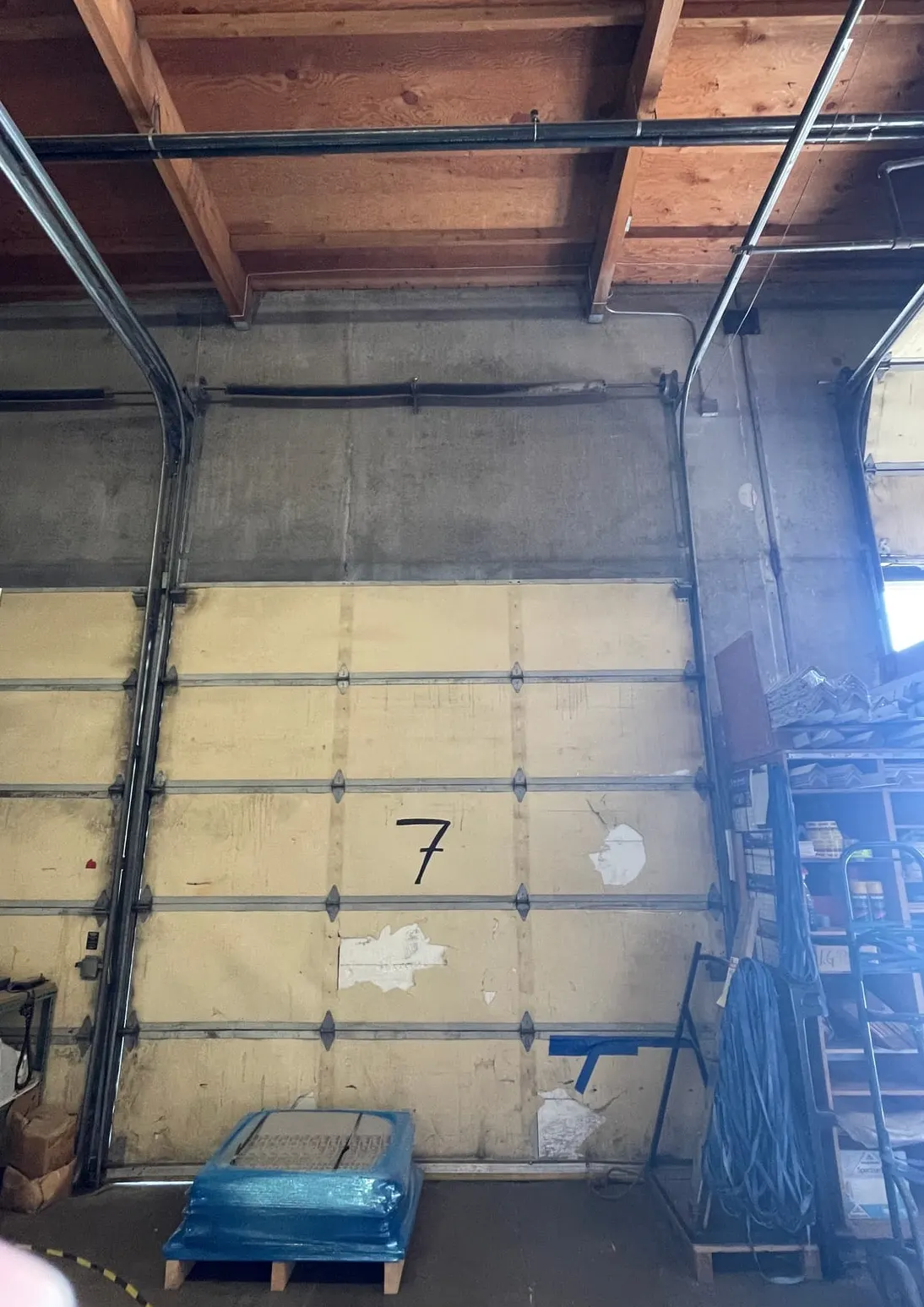
The Call That Started the Argument
A technician pulls up to a property with a house, a detached workshop, and a small roll-up bay door the owner added for his landscaping business. The homeowner is convinced all three doors work the same way and should get the same once-a-year tune-up. His wife thinks the shop door, which runs twenty times a day and weighs three times what the house door weighs, needs to be treated differently. This argument happens more often than you'd think, because from the driveway, a commercial-style overhead door and a residential garage door can look like cousins. Underneath, they're built for completely different jobs.
Same Shape, Different Machine
A residential garage door is designed around convenience: it opens a couple of times a day, holds back wind during storms, and gets sized for a two-car bay. A commercial or warehouse door is designed around cycles and abuse. If a door on a shop or loading bay opens and closes dozens of times daily, every part of it has to be built heavier and rated for a higher number of open-close cycles before it wears out.
Panel Construction
Residential doors are usually lighter-gauge steel, sometimes with insulation sandwiched between two thin skins, built to look good and hold up to normal weather. Commercial doors often use heavier gauge steel or solid wood/metal slats, because they take more physical contact — forklifts, pallets, delivery trucks backing in close — not just wind and rain.
Springs and Cycle Life
This is the big one. Residential torsion springs are typically rated for somewhere around 10,000 cycles, which is plenty for a door that opens twice a day for years. A warehouse door opening dozens of times daily burns through that cycle count fast. Commercial installations use springs rated for tens of thousands of cycles, sometimes with a torsion spring system doubled up for redundancy, because a snapped spring on a bay door isn't just inconvenient, it can shut down a loading dock.
Openers and Hoists
A residential opener is a chain or belt-drive unit sized for a door that weighs a couple hundred pounds. Commercial doors often need a jackshaft operator or trolley hoist with a motor rated for continuous duty, because the door is heavier and moving far more often. Trying to run a warehouse-size door off a residential-grade opener is a shortcut that burns out motors and strips gears fast.
Why This Matters More Here Than Elsewhere
In this part of Florida, the climate adds its own stress to both door types, but it hits them differently. Humidity and afternoon downpours swell wood panels and encourage rust on hardware that isn't properly sealed or lubricated, and that happens whether the door is on a house or a shop. But a high-cycle commercial door is moving through that moist air far more often, so corrosion on rollers, hinges, and track gets a lot more exposure time. Add hurricane-season wind-load requirements, which apply to both door types but matter even more on larger commercial openings where a failure means a bigger opening for wind to push through, and you can see why a shop door needs more frequent eyes on it, not less.
Maintenance Schedules Really Are Different
This is where the argument usually gets settled. A residential garage door holds up fine with a seasonal maintenance check, maybe twice a year, especially heading into hurricane season. A high-cycle commercial or warehouse door needs more frequent inspection because the parts are wearing down faster:
- Spring cycle count should get checked more often since high-use doors burn through rated cycles years sooner than a house door would
- Rollers, hinges, and track hardware need inspection for wear and rust more frequently given the added moisture exposure from repeated opening in humid air
- Opener motors and drive chains on continuous-duty units need load and alignment checks since they're working far harder than a residential chain-drive unit
- Weatherstripping and bottom seals wear out faster on doors that cycle constantly, letting in more of the afternoon rain and humidity
The Bottom Line for the Argument
If the door in question opens a few times a day and lives on a house, residential-grade maintenance is genuinely enough. If it's cycling constantly on a shop, warehouse, or commercial bay, it needs more frequent checks, heavier-rated parts, and an opener built for the workload, not a scaled-up version of what's on the garage at home. They may look alike from the curb, but they're not maintained on the same clock.
When to Call Wesley Chapel Garage Door Service
If you've got a detached shop, home-based business, or commercial bay door anywhere from Wesley Chapel out to Land O' Lakes, Lutz, New Tampa, Zephyrhills, San Antonio, Dade City, or Odessa, it's worth having someone look at the spring system and opener setup before cycle fatigue turns into a breakdown during business hours. We handle everything from Garage Door Spring Repair sized for high-cycle use to full Garage Door Opener Installation built for continuous-duty demands, and we'll tell you honestly whether your current setup matches how hard the door actually works.
If you're not sure whether your shop or warehouse door is holding up the way it should, call Wesley Chapel Garage Door Service for a straight answer and a fix done right the first time.