
Rule of Thumb
If you disconnect the opener and the door stays exactly where you leave it, it's balanced; if it drifts down, creeps up, or feels heavy in your hands, it isn't. The exceptions: a door you just lubricated or serviced within the last day can feel slightly different as the new lubricant settles in, and a door with a sticky manual-release mechanism can mimic imbalance even when the springs themselves are fine. Rule those two things out before you assume the worst.
Why This Matters More Here Than You'd Think
Garage doors in this part of Florida work harder than most. Humidity swells wood and composite panels during the wet months, afternoon downpours add moisture weight to the door itself, and hurricane-season wind-load springs are already under more cyclical stress than a standard setup. A door that's even slightly out of balance compounds all of that, forcing the opener to compensate for both the added environmental weight and the spring tension it was never asked to fight.
Tools You'll Need
- Stepladder
- Work gloves
- A helper (not required, but useful for safety)
- Flashlight
- Pencil or piece of tape to mark the track
Step-by-Step: How to Test the Balance
- Close the door completely. Start from a fully closed position so your readings are consistent.
- Find the manual release cord hanging from the opener trolley (usually a red handle) and pull it to disconnect the door from the opener. This lets you move the door by hand without the motor assisting or resisting.
- Lift the door by hand to about waist height, roughly the halfway point of the track, and let go.
- Watch what happens. A balanced door stays put or drifts no more than an inch or two. A door that slams shut or shoots upward on its own is unbalanced, and the springs are doing either too little or too much work.
- Repeat the test at three-quarters open. Some doors are balanced in one position and not another, which usually points to a spring that's wearing unevenly rather than one that's simply worn out.
- Reconnect the opener by pulling the release cord back toward the trolley until it clicks into place, then test the opener with the remote to confirm it's engaged.
What an Unbalanced Door Does to Your Opener
The opener motor is built to move a door that's already doing most of the lifting itself, with the springs carrying the bulk of the weight. When a door is out of balance, the motor has to make up the difference every single cycle. Over time that shows up as:
- A motor that runs hotter and louder than it used to
- Gear and sprocket wear inside the opener unit, since the mechanism is straining beyond its rated load
- Frayed or stretched lift cables, which take on uneven tension they weren't designed for
- Safety reversal sensors triggering unnecessarily, because the door isn't moving at the speed or force the opener expects
- A shortened lifespan for the opener itself, sometimes by years, from strain it was never built to handle
In a lot of homes here, this is a slow failure. The door still opens and closes, so nothing seems urgent, right up until a cable snaps or the opener burns out entirely, usually during a stretch of heavy summer storms when you need it working the most.
What You Can Check vs. What Needs a Technician
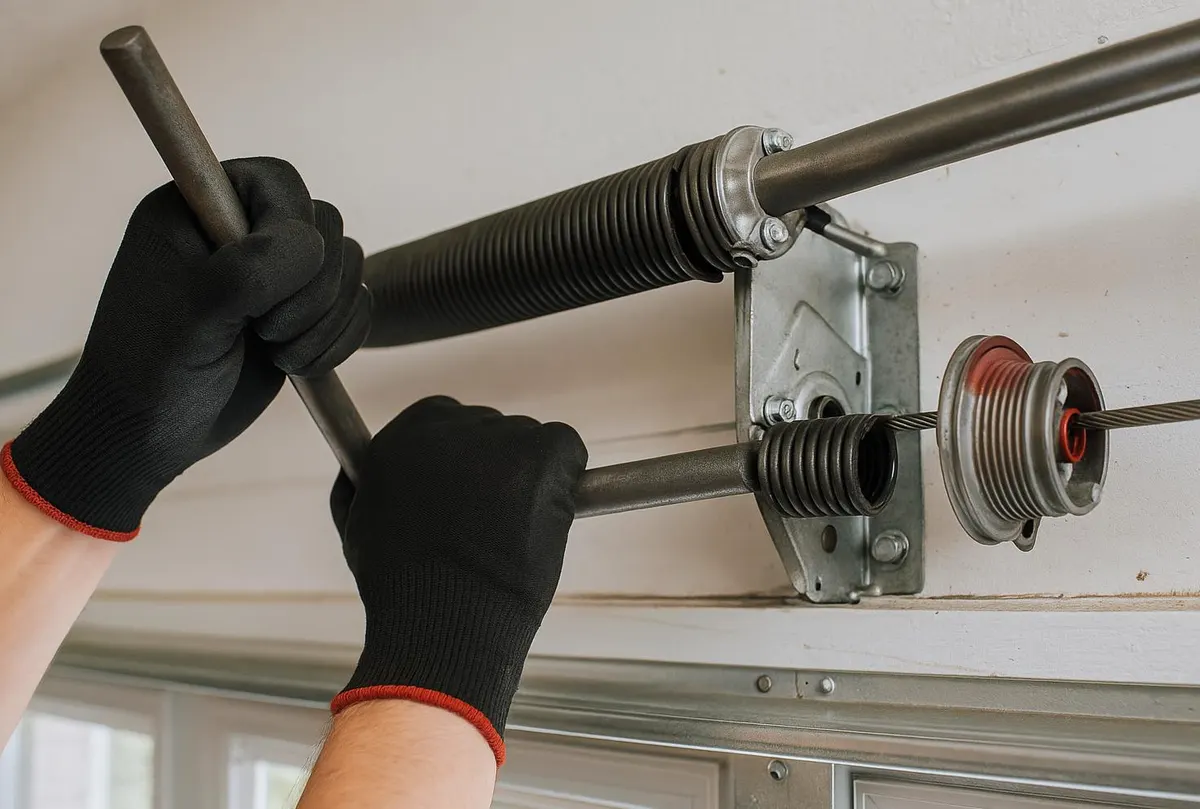
The balance test itself is safe and reasonable for a homeowner to run. It takes five minutes and tells you a lot. What's not a DIY job is fixing an imbalance once you've found one. Garage door springs, whether torsion or extension, are under enough tension to cause serious injury if adjusted incorrectly, and getting the tension wrong in the other direction just creates a new imbalance. Anything involving:
- Adjusting or replacing torsion springs
- Re-tensioning extension springs
- Replacing worn cables connected to the spring system
- Diagnosing why a door is balanced in one position but not another
should go to a technician with the right winding bars and experience, not a set of pliers and a Saturday afternoon.
When to Call Wesley Chapel Garage Door Service
If your balance test shows the door drifting, slamming, or lifting unevenly, that's the point to call us rather than keep using the opener as a workaround. We handle Garage Door Spring Repair for doors that are visibly out of balance, and if it's been a while since anyone's looked at the rollers, cables, and hardware as a system, our Garage Door Maintenance & Tune-Up service catches the smaller issues, rust starting on spring coils, a cable fraying at the drum, before they turn into a 2am emergency during storm season. We'll show you exactly what we find and what it's doing to your opener before we touch anything.
If your garage door in Wesley Chapel, Land O' Lakes, Lutz, New Tampa, Zephyrhills, San Antonio, Dade City, or Odessa isn't holding its position, give us a call. We'll get it balanced and your opener back to doing the job it was built for.