
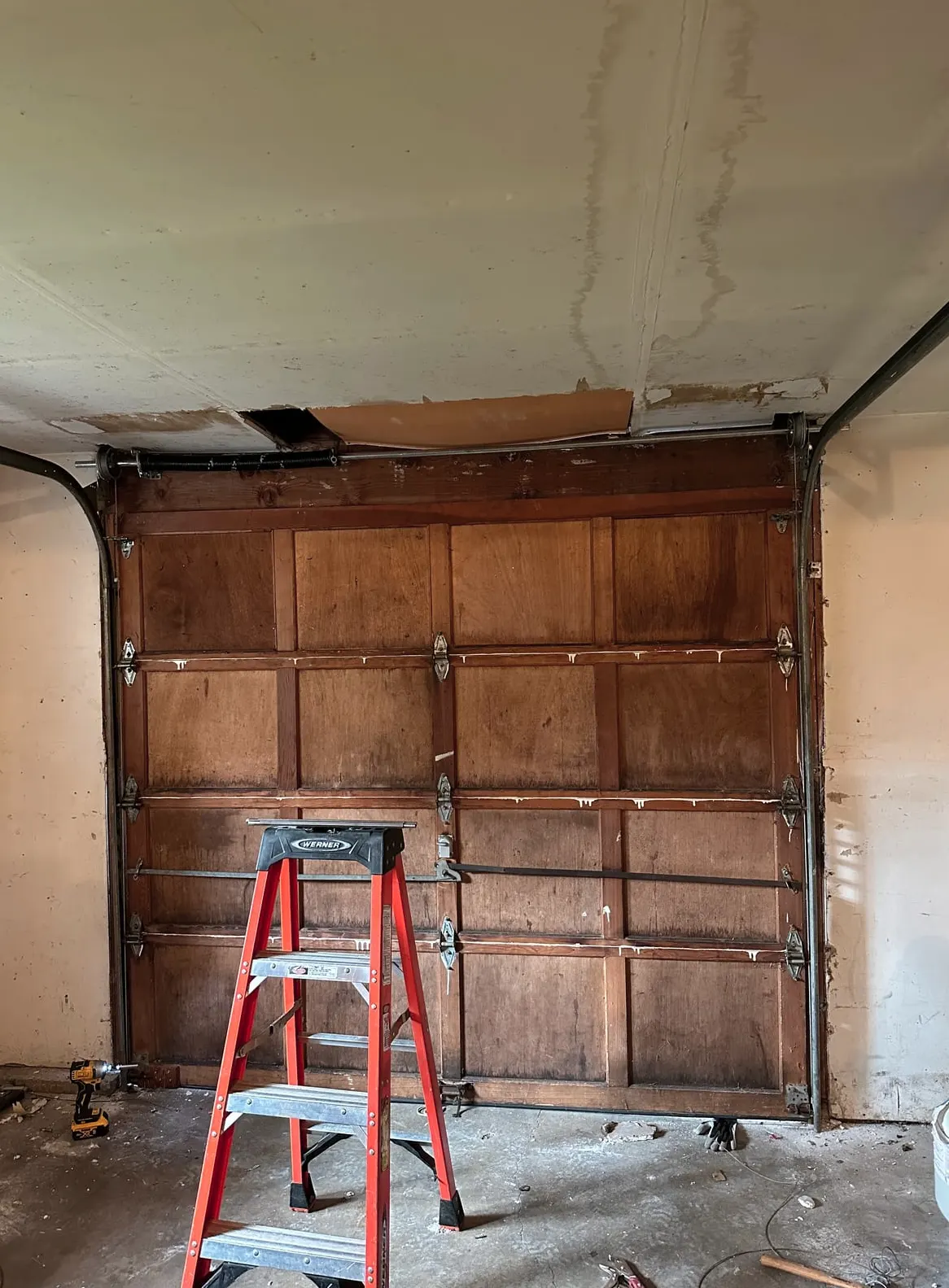
Put this off for one more season and here's what you're risking: condensation building behind the new drywall, an opener straining against weight it was never built to lift, and hardware rusting shut behind a wall because nobody dealt with the door before the contractor showed up. None of that shows up on day one. It shows up in June, when the humidity peaks and the wall starts smelling faintly like a damp towel.
What Actually Happens When a Garage Becomes a Room
The inside changes fast — insulation, drywall, maybe a mini-split or ducted AC. But the outside wall, the one with the door in it, doesn't automatically get the memo. The track, springs, and opener are all still sitting right there behind the new ceiling or alongside the new workout bench. The question that actually matters for the argument is simple: does the door still need to open and close, or is it getting fixed in place for good?
If It Still Opens (Secondary Parking, Storage Access, Resale Flexibility)
If you're keeping the door functional — even if it's only used twice a month — it still has to meet the same wind-load expectations as any other door on the house. That matters here because Pasco County sees real hurricane-season wind, and a door that's been quietly weakened (extra holes drilled for shelving brackets, a track bent from being bumped by gym equipment, weatherstripping gone brittle) can fail under storm load even if it looks fine on a calm day.
It also means the opener and springs still have to match the door's actual weight. If the conversion included swapping to a heavier insulated panel door for better temperature control inside the new room, the original spring tension and opener horsepower may no longer be correctly matched. That shows up as a door that struggles to lift, reverses randomly, or slams the last foot on the way down.
If It's Getting Fixed in Place for Good
This is where people cut corners. Screwing the door shut from the inside, or just leaving it in the down position and calling it done, traps moisture behind the panel with nowhere to go. Florida humidity doesn't need much encouragement — a sealed, unventilated gap behind a stationary door is exactly the kind of spot that grows mold and rusts hinges from the inside out, and you won't see it until the smell or the stain shows up on the drywall.
Done right, fixing a door in place means disconnecting the opener, properly releasing spring tension, and either removing the door and hardware entirely or securing it in a way that still allows airflow and drainage. Half-measures are the expensive mistake here, not the conversion itself.
The Moisture Problem Nobody Argues About Until It's Too Late
Garages aren't built like living spaces — they're built to breathe and drain. Once you add conditioned air on one side of an uninsulated steel door, you get condensation on the door's interior surface, especially during the humid stretch from late spring through hurricane season. That moisture runs down, pools near the bottom seal and weep holes, and sits against the track hardware. Over a year or two, that's rust on rollers and hinges that otherwise would've lasted a decade.
The Short Version to Settle the Argument
- Keeping the door functional: fine, but the opener and springs need to match the door's actual current weight, and the hardware needs to stay in good repair for storm season.
- Fixing the door in place: fine, but it has to be done with the opener disconnected, tension released safely, and some provision for airflow — not just screwed shut.
- Either way, don't skip dealing with moisture at the seal and weep holes once there's conditioned air on the other side of that wall.
When to Call Wesley Chapel Garage Door Service
If the conversion already happened and the door's been acting strange since — slow to lift, uneven, or visibly rusting at the hinges — that's usually a sign the opener or spring tension no longer matches the door's weight, and it's worth a Garage Door Maintenance & Tune-Up before storm season puts real load on it. If you're switching to a heavier insulated door as part of the conversion, our Garage Door Panel Replacement service handles matching the new panels to springs and opener that can actually lift them safely.
Give Wesley Chapel Garage Door Service a call before the next storm system rolls through — we'll tell you honestly whether the door needs attention or whether you're good to go.