
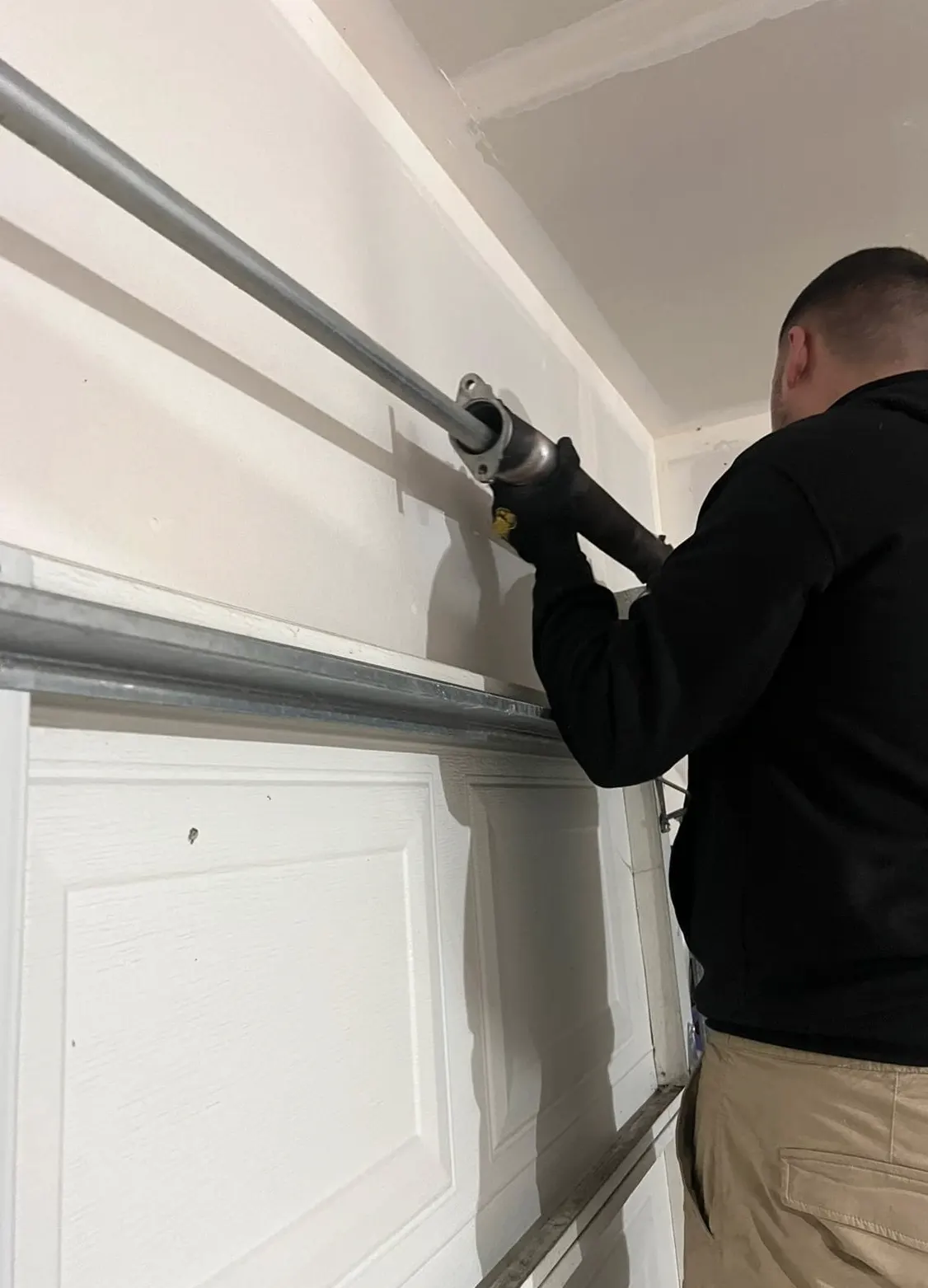
The Moment You Know Something's Wrong
It's usually loud. A bang from the garage, almost like a car backfiring, and then the door won't budge—or it opens a few inches and stops. Maybe you walk out and see a gap in the coiled spring above the door, or a cable hanging loose instead of taut. That's a broken spring, and it's one of the most common calls a garage door technician gets, especially after a stretch of hot, humid weather that's been swelling wood framing and putting extra strain on hardware.
Once you know what you're dealing with, the next question is almost always the same: what is this going to cost? The honest answer is "it depends," but it depends on a short list of specific things, and knowing them helps you tell a fair quote from an inflated one.
National Price Ranges for Spring Replacement
These are general national ranges, not a quote for any specific home—actual pricing depends on your door, your springs, and who you hire.
- Single torsion spring replacement: roughly $150–$350, including parts and labor.
- Torsion spring pair (both springs replaced together): roughly $250–$450, since most technicians recommend replacing both even if only one broke.
- Extension springs (the kind that stretch along the upper tracks instead of coiling above the door): often $100–$300 for a pair, generally less per spring than torsion systems.
- High-cycle or heavy-duty springs, built to handle more open-close cycles before wearing out: add roughly $30–$75 per spring over standard parts.
Most residential jobs land somewhere in that $150–$450 window. Commercial doors, oversized doors, or custom doors can run higher because the springs themselves are bigger and heavier-duty.
What Pushes the Price Up
Spring Type and Door Weight
Torsion springs generally cost more to replace than extension springs because they require more specialized tools and carry more stored tension, which makes the job riskier without the right equipment. Heavier doors—insulated steel doors, carriage-style doors, or anything oversized—need stronger springs rated for that weight, which costs more than standard hardware.
Number of Springs
Two-car garage doors typically run on two torsion springs. If one breaks, the other is usually close behind, so most technicians will quote replacing both at once. It costs more up front than fixing just the broken one, but it avoids paying for a second service call a few months later.
Cycle Rating
Springs are rated by how many open-close cycles they're built to handle before wearing out—often 10,000 cycles for standard springs, and 20,000 to 100,000 for high-cycle versions. If you use your garage door heavily, upgrading to a higher cycle rating costs more initially but can mean years between replacements.
Corrosion and Humidity
In a climate with as much humidity and afternoon rain as this part of Florida sees, metal hardware is exposed to a lot of moisture over time, and that includes garage door springs, cables, and the bearings they ride on. Rust can weaken a spring or cause it to bind, and when that's the case, a technician may also recommend replacing corroded bearing plates or cable, which adds to the total. Galvanized or coated springs resist moisture better and may cost slightly more than uncoated options, but they tend to hold up better here than bargain hardware.
Same-Day or After-Hours Service
A spring that breaks on a Saturday evening, or during a storm when you need the door operational before more rain hits, often comes with a premium for emergency or after-hours scheduling. If the door can wait until regular business hours, you'll generally pay less.
What Can Keep the Price Down
- Standard-size residential doors with standard-weight hardware, rather than oversized or custom doors.
- Scheduling during regular business hours instead of nights, weekends, or holidays.
- Routine maintenance that catches a weakening spring before it snaps and causes additional damage to cables, rollers, or the opener trying to force a stuck door.
- Bundling the spring replacement with a scheduled tune-up visit, since the technician is already on-site and inspecting the rest of the system.
What a Real Quote Should Include
A trustworthy quote should be written, not just a number quoted over the phone, and it should spell out:
- Spring type, size, and cycle rating—so you know exactly what's going on the door, not just "a spring."
- Whether one or both springs are being replaced, and why.
- Labor and any trip or service-call fee, shown separately from parts.
- Any additional hardware—cables, bearings, end plates—if they're worn or corroded and need replacing at the same time.
- A safety check of the door's balance and the opener's force settings after the new springs go in, since a door that isn't balanced puts uneven strain on the opener.
- Warranty terms on both the spring and the labor.
If a quote is just a single flat number with none of that detail, ask for the breakdown before you agree to the work.
When to Call Wesley Chapel Garage Door Service
If your door won't open, makes a loud bang, or the cable looks loose, that's a job for our Garage Door Spring Repair service—don't try to force the door or release the opener and lift it manually, since a broken spring makes the door far heavier than it looks. We'll inspect the spring, cable, and bearings, give you a written quote before touching anything, and explain whether one spring or both need replacing and why. If your springs are intact but showing early wear—stiff movement, visible rust, or a door that's starting to sound different—our Garage Door Maintenance & Tune-Up service can catch that before it turns into a snapped spring and an inconvenient repair.
If you're hearing that bang or staring at a door that won't move, call Wesley Chapel Garage Door Service. We serve homes and businesses throughout Wesley Chapel, Land O' Lakes, Lutz, New Tampa, Zephyrhills, San Antonio, Dade City, and Odessa, and we'll give you a straight answer and a written quote before any work starts.